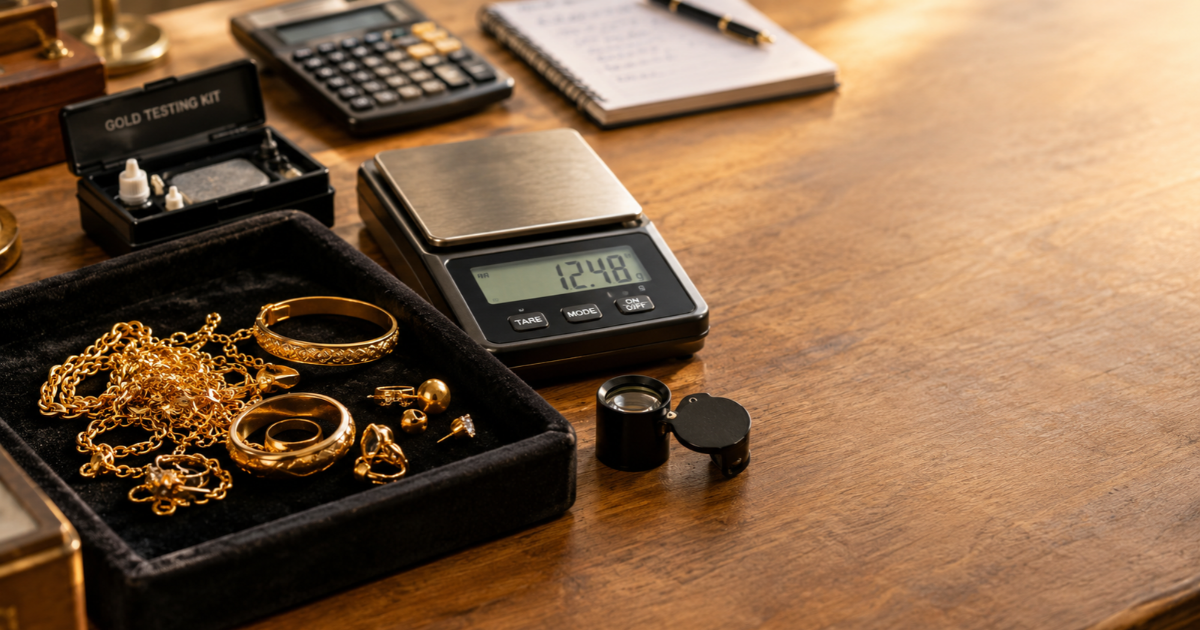
A broken gold chain does not become worthless just because it can no longer be worn. The same applies to a damaged ring, a single gold earring, or a bracelet that has been sitting unused for years. If the item contains real gold, its material may still have a resale value.
The difficult part is knowing how much that gold is worth before selling it.
Scrap gold pricing is not based on the original purchase price or the amount you spent at a jewelry store. A buyer needs to determine how much gold an item contains, establish its purity, and calculate its value using an applicable gold market price. The final cash offer may then reflect the buyer's own purchasing terms.
Understanding these steps gives you a clearer picture of what happens when you take unwanted gold to a buyer.
How Scrap Gold Pricing Differs From Regular Jewelry Value
When you purchased a gold ring or necklace, the price may have included the jeweler's workmanship, design, retail markup, and other charges. Those costs do not automatically carry over when you sell the piece as scrap.
Consider a necklace with a broken clasp. Its original design may no longer matter much to a buyer who intends to recover the gold. What matters more is the amount of genuine gold in the necklace and the price that gold can command.
This distinction is important because sellers sometimes expect to recover a large portion of the original retail price. Scrap gold is generally assessed according to its metal content instead.
Some antique or designer pieces may have additional resale value, so it is worth checking whether an item is collectible before selling it strictly for its gold content.
The Three Details Behind a Scrap Gold Calculation
The purity of the piece
Gold jewelry is commonly made by combining gold with other metals. This changes its strength, durability, and gold content.
The karat number helps identify the proportion of gold in the alloy. For example, 10K gold contains approximately 41.7% gold, while 14K contains approximately 58.3%. An 18K item contains 75% gold.
These percentages matter when two items have the same weight. A 12-gram 18K bracelet contains more pure gold than a 12-gram 10K bracelet, assuming both weights refer to the same type of material.
A stamp inside a ring or on a clasp can provide a useful starting point, but it should not be treated as conclusive proof. The buyer may test the item to verify its purity.
The amount of gold being purchased
The weight shown on a scale does not always represent the weight of the gold itself.
A pendant may contain a gemstone. A necklace may have components made from different materials. Some pieces include springs, inserts, or other parts that are not gold. Depending on the construction and the buyer's process, these materials may need to be excluded from the payable gold weight.
For sellers, one useful question is: Is this the total item weight or the weight being used to calculate the gold payment?
Knowing the difference can help explain why a buyer's calculation may not match an estimate based on the weight of the complete piece.
The gold price used for the offer
Gold prices move over time, so a calculation made on one day may differ from a calculation made on another.
A buyer typically starts with an applicable market price and adjusts the calculation for the item's gold purity. The buyer's actual purchase price may also reflect refining, processing, operating costs, and the terms of the transaction.
When requesting an estimate, ask which gold price is being used and whether the quoted amount represents the estimated metal value or the actual amount payable to you.
A Simple Guide to Estimating Your Gold’s Purity
You can make a rough calculation at home to understand the gold content of an item. This will not replace professional testing, but it can help you follow the buyer's figures.
For example, consider a plain 14K gold ring weighing 8 grams.
First, convert the karat rating into a purity percentage:
14 ÷ 24 = approximately 0.5833.
Next, multiply the weight by that percentage:
8 grams × 0.5833 = approximately 4.67 grams of pure gold.
This means the ring contains an estimated 4.67 grams of gold, assuming the 8-gram weight represents the gold alloy being assessed and the stated purity is accurate.
To estimate the metal value, multiply the pure gold content by the applicable price per gram of pure gold.
For illustration only, assume that price is $100 per gram:
4.67 × $100 = $467 in estimated metal value.
This example uses an assumed price, not a live market quote. It also does not guarantee a $467 cash offer. A buyer may pay a different amount based on testing, the payable weight, and the buyer's pricing terms.
This calculation shows how the figures connect, but it does not guarantee the exact amount you will receive.
Why Two Buyers May Quote Different Amounts for the Same Gold
Imagine taking the same damaged bracelet to two gold buyers. Both examine the bracelet, but their offers are different.
A difference in offers does not necessarily mean either buyer is wrong. They may use different pricing margins, have different processing costs, or arrive at different assessments of the item's purity or payable weight.
The best way to compare their offers is to ask each buyer to explain the figures behind the amount.
Try to establish:
- The purity assigned to the item after testing.
- The weight used in the calculation.
- The market price or rate applied.
- Any deductions or costs affecting the payout.
- The final amount you will receive.
An explanation that includes these details gives you a more meaningful basis for comparison than a single cash figure.
Which Unwanted Gold Items May Still Have Scrap Value?
Sellers often delay getting an estimate because they assume damaged jewelry is no longer useful. However, an item's condition and its gold content are two different things.
Depending on the buyer's acceptance policy, items worth evaluating may include:
- Chains with broken links or damaged clasps.
- Rings that are bent, cracked, or no longer fit.
- Bracelets that cannot be repaired economically.
- Single earrings without their matching pair.
- Outdated jewelry that is no longer worn.
- Gold pieces left over after a repair or redesign.
The same assumption should not be made about every gold-colored object. Gold-plated jewelry and pieces made from other metals may have little recoverable gold compared with solid gold jewelry. A buyer must establish what the item actually contains.
If you have several unwanted pieces, keeping them together for an assessment can be convenient. Still, ask how each item is tested and priced, especially if the pieces have different karat markings.
What Sellers Should Do Before Taking Gold to a Buyer
You do not need specialist equipment to prepare for a gold-selling appointment. A few simple steps can make the conversation more productive.
Separate pieces with different markings. If some items are marked 10K and others 14K or 18K, keeping them separate makes it easier to discuss their different gold content.
Make a note of unusual items. Antique jewelry, branded pieces, or jewelry with valuable stones may deserve an assessment beyond scrap pricing.
Ask about the testing process. Find out how the buyer confirms purity and determines the weight used for payment.
Request the calculation before agreeing to sell. You should be able to understand how the buyer arrived at the offer and whether any deductions apply.
Take time to compare options. If the explanation is unclear, ask questions or obtain another estimate before making a decision.
These steps will not guarantee the highest possible price, but they can help you make a more informed choice.
Turn Unused Gold Into Cash With Gold Wholesale USA
Unwanted jewelry can take up space for years simply because it is broken, outdated, or no longer suits your needs. If you are considering selling it, understanding the calculation is a useful first step.
Gold Wholesale USA provides a service for people looking to sell unwanted gold for cash. If you have broken chains, damaged rings, or other gold jewelry you no longer use, you can learn more about the service through the Gold Wholesale USA website.
Before accepting an offer, make sure you understand how the item's purity, weight, and applicable gold price affect the final payment. A clear explanation of those figures helps you decide whether to proceed.
Frequently Asked Questions
Does the original price of gold jewelry affect its scrap value?
Usually, the original retail price is not the main factor. Scrap pricing focuses on the gold content and the applicable market price. Workmanship, branding, or collectible appeal may matter if the item has a resale market beyond its metal content.
Is a broken gold chain worth selling?
It may be. If the chain contains genuine gold, damage to its links or clasp does not necessarily eliminate its scrap value. The buyer still needs to determine its purity and payable gold weight.
Does heavier gold jewelry always receive a better offer?
Not necessarily. A heavier item may contain less pure gold if its karat rating is lower or if part of its weight comes from non-gold materials. Weight and purity must be considered together.
Can I calculate my exact cash payment at home?
You can estimate the gold content if you know the item's weight and verified purity. An exact payout is harder to determine because the buyer's pricing terms, testing results, and current market rate also matter.
What is the most important question to ask a gold buyer?
Ask the buyer to explain how the final offer was calculated. Specifically, clarify the tested purity, payable weight, gold price used, and any deductions. These details make it easier to understand and compare offers.